Serious woodworkers know: Cordless brad nailers went from special-occasion to must-have in a very short time. Having the option of working cordless let you get on your knees, or into awkward spots where a compressor hose won’t go, and no longer trip over air lines. That’s much more efficient, as well as easier on your back.
It make the job easier and the workflow better… When hanging crown molding, for example, or constructing cabinets. It’s not just about comfort; it’s also about accuracy and patience, qualities we all tend to lose when we’re fighting our tools.
When selecting a model, don’t get caught up in marketing talk; go by mechanical reliability. Many of these cordless nailers is inconsistent drivers, and some fail miserably at what makes ’em cool to use. You want a tool that avoids jamming or leaving marks on your workpieces.
What you want is a driving tool that drives nails clean each time. Fortunately, there are several on the market, but just a handful do a good job with both hard woods (dense) and soft woods (delicate). Here’s a rundown of the leaders and their compromises.
Top Cordless Brad Nailers For Woodworking Projects
Why Cordless Brad Nailers Are Essential
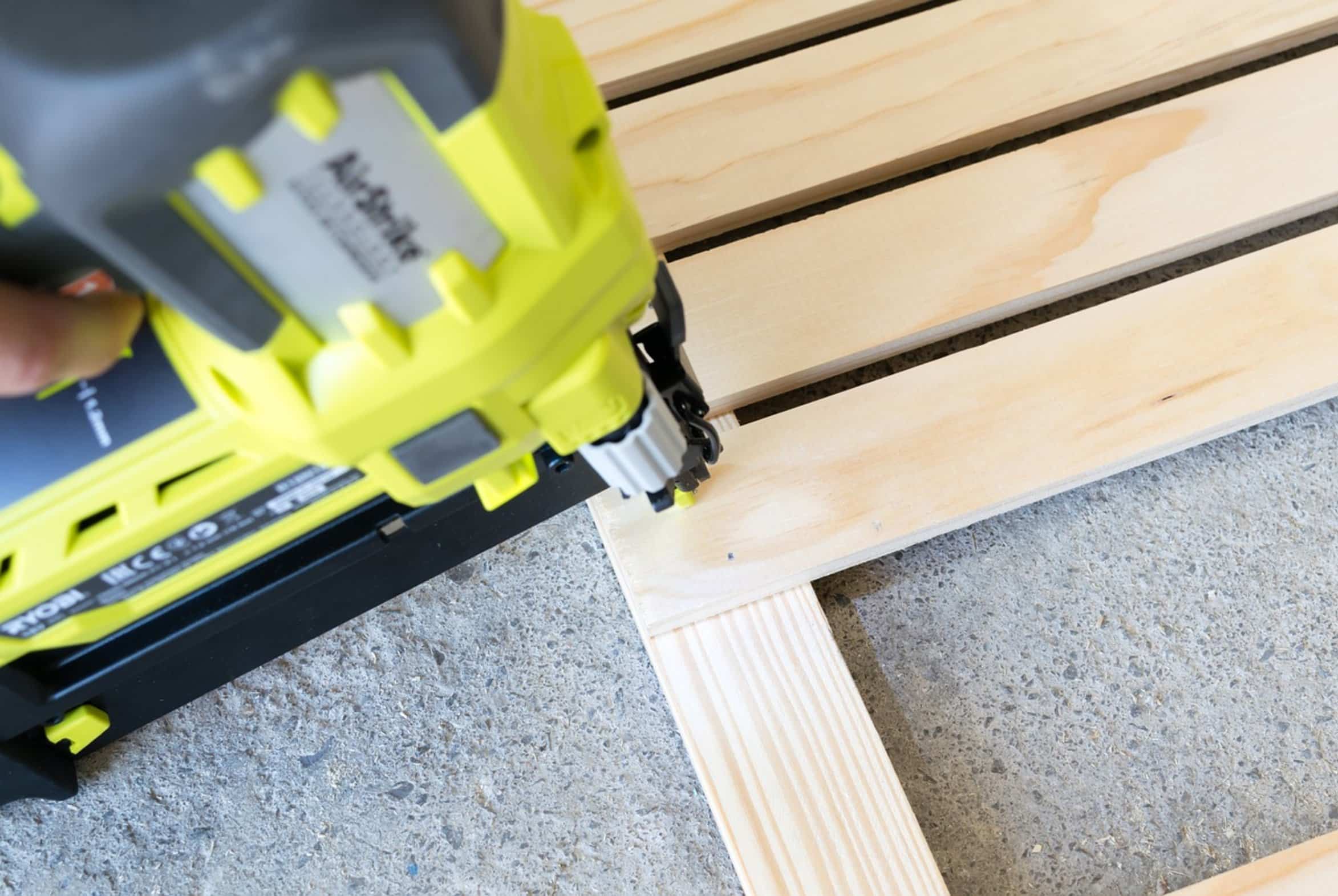
Known for making durable tools, Milwaukee continues that tradition with the M18 Fuel brad nailer. Their brushless motor deliver sufficient energy to push 18 gauge brads through hardwood such as maple and oak when many others falls short. What makes it realy special is its even driving action.
No more checking the nail’s length because you suspect the battery voltage have dropped. Clearing a jam couldn’t be easier too. A solid feel and good handhold make it user friendly.
While not the lightest on the market, that heft translate to better balance while working. This is the model for the professional looking for power and durability over everything else.
Milwaukee M18 Fuel Brad Nailer Review
If you have DeWalt tools already, their 20 Volt MAX XR brad nailer is a solid option.
Like many others on this list, it’s very slim, allowing you to get into tight corners and closed joints where larger tools won’t fit. Its electronic control system prevent double firing, which keeps you safe and protects your project from accidental damage. Though it won’t drive quite as hard into something like hard maple different than the Milwaukee, it will handle pine, cedar, and poplar without a problem.
Because of its compact size, it excels at doing more detailed trim work and cabinetry. It provide enough power for most home projects while still being portable. It is user friendly.
DeWalt 20 Volt MAX XR Brad Nailer Review
With the 18 Volt LXT line, Makita emphasizes user comfort and ergonomics. For example, the brad nailer are designed to be low profile, reducing arm fatigue over extended periods. This is a consideration if you are using this as finish carpenter in odd positions like overhead.
You have an adjustable drive force, which means you can dial in your nail set to match density of the wood. Handy if you’re bouncing back and forth between framing nails and finish nails. The batteries lasts well, and a single charge will usually get you through a full day’s work.
It is an all-around nice piece of equipment, one that rewards good technique and pays attention to long-term comfort.
Makita 18 Volt LXT Brad Nailer Review
Bosch has an interesting design on their side-loaded Pro line of brad nailers that are very low-profile and have a lot less bulk up high (where your hand would otherwise go) compared to other top-loaders. It’s super quiet too.
Very nice if you’re doing any nailing inside. Nails show through the clear housing pretty well, and there’s also a big window to watch what you’re doing. And it puts out enough power for most things around here, though I’ve had to do some double-passing in really hard woods.
If you care about how easy it is to use more than pure power, this one might of be for you.
Bosch Side-Loaded Brad Nailer Review
When choosing a cordless brad nailer, think about what material you are using most frequently. For example, if you do a lot of trim work, paying close attention to tool shape and how it feels to hold will be critical.
Hardwoods? Power and maintaining drive force throughout the shot is most important. Match battery type with your other tools in the shop to cut down on clutter and save some bucks.
Test the tool if possible, does it jam easly? How does it feel in your hands, particularly at the trigger? The best tool becomes an extension of your hand; you’re focused on the craft, not the machinery.
A good cordless brad nailer eliminate the physical limits and allows for more free-building.