Four holes is drilled on the corners of where you want your square to go. They should be slightly larger then your final dimension to give the files room to work. Take a flat file and file out all material inside those holes.
That leaves you with a square cut out. The key is to keep the file flat against metal while filing, and to only file in one direction. Don’t rock the file back and forth or it will round inside corners off.
It’s tedious, but leave a nice clean square cut. It take some patience, because you have to make sure the sides are kept parallel as you do this. Otherwise you’ve got a rhombus instead of a square if you file wrongly.
Four Methods for Cutting Square Holes in Metal
Filing a Square Cutout by Hand
For more convenueince, you could even have one of these cut on a water jet cutter or CNC machine. These computers guides the machine along path it needs to take to cut your shape out of raw material. Set the parameters and draw the square in software.
Let computer do the rest. The precision is unmatched. Edges is smooth and don’t need filing.
Pilot holes prevents wasted material. The corners are sharp too. The downside is that you may not own or have access to a CNC router.
Using CNC or Water Jet Cutters
If you’re doing a small run, it might take longer to get things all set up then it does to actualy cut. This result in high overhead. It is good if you’re making lots and/or very precis stuff.
Milling Metal with a Square End Mill
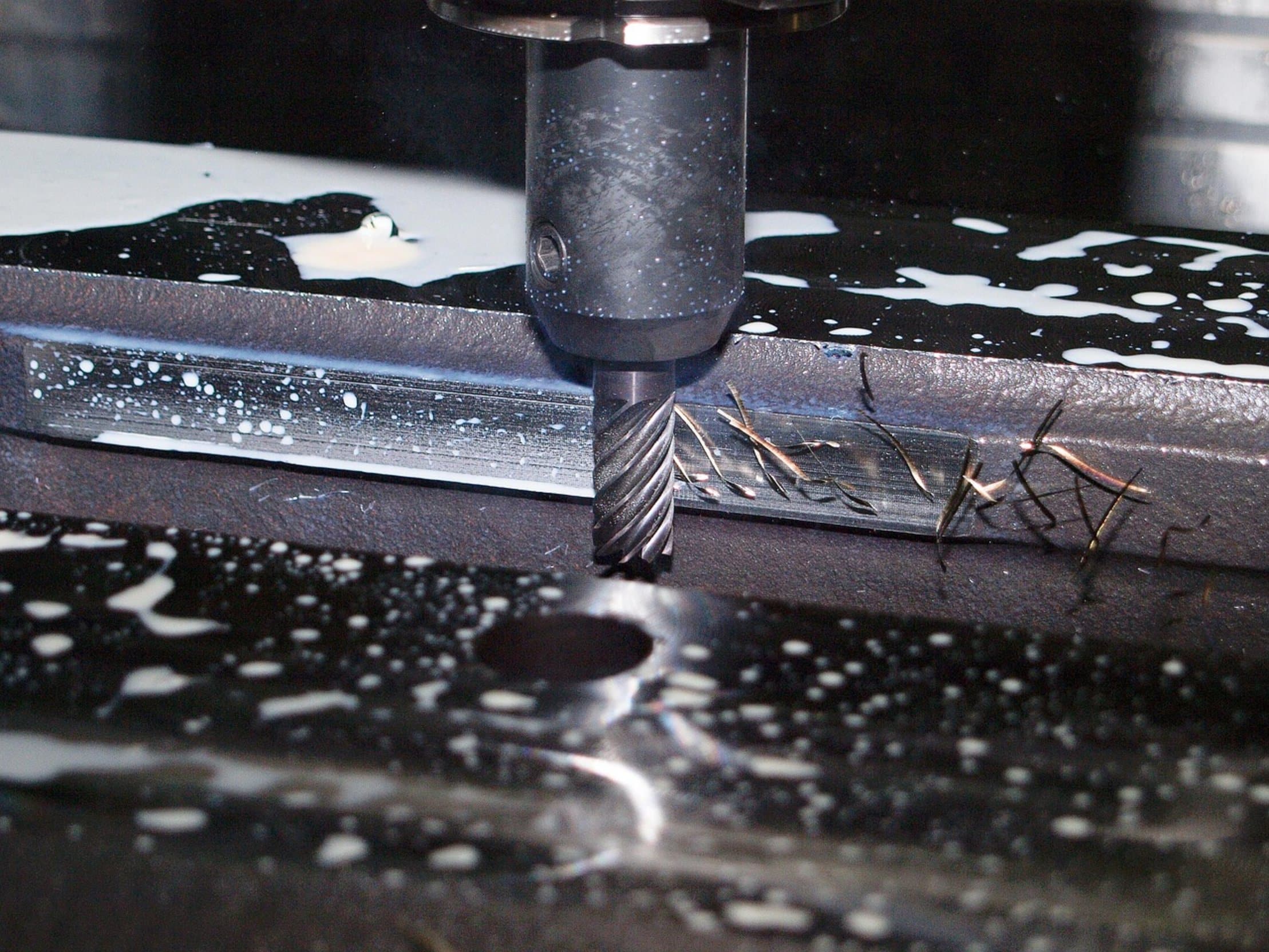
For a middle ground approach you could put your metal into a vise, clamp it down on a milling machine, and with a square end mill cut out the shape. This will be quicker then filing but also take a bit more finesse than having something cut for you. Know your depth of cut and know your feed rate so you don’t tear through the surface or snap off your tool.
The nice thing about milling is you has some control over the size. If your starting measurements was wrong, just adjust to match. However since there are chips of metal hanging around you need to deal with them.
Get rid of shavings by either using coolant or an air blast to blow the shavings away from area. Otherwise they will jam up in the corners and ruin finish of the surface or even break your tool. It is a skilled technique, but it give you a lot of direct control.
Laser Cutting Thin Sheet Metal
For thin metal, you can laser cut. Laser cuts by burning off or melting material as it travels along the programmed path. It is fast.
Tolerances is tight. Thick metals can warp or become harder near heat-affected zone. It is a good option for most sheet metal projects.
Which is better? That’s up to you and what tools are available to you. Once; use a file.
Fifty times, get yourself some sort of laser/CNC service. Use that square hole as a test of your shop’s capabilities. Measure twice, cut (or drill) once.
Respect your metal and make wise choices.