When choosing a table saw for your shop, it’s never simply a matter of what’s best for cutting wood. There is also issue of safety, which mean managing risk while still keeping a precise cut. And for years, one model stood above all others: the Powermatic PM2000.
Heavy. Solid. Built to last a lifetime.
Enter SawStop. Their technology, which essentially redefined your approach to safety. And now here you stand in the middle of showroom with two wildly different approaches to cutting wood.
One is old-school mechanical ruggedness. The other is instant protection against serious injury. Both will cut through wood, but each solve a unique problem for today’s shop.
This has become a touchy subject in woodworking world; it’s an issue that hits at the core of many woodworkers’ beliefs about workshops. To some, safety equipment is akin to a crutch, enabling laziness. To others, it’s simply good business when the bottom line depend on flesh-and-blood worker.
Whatever your opinion may be on this topic, take note of engineering involved with both machines. It doesn’t require taking sides here. Simply know what you’re purchasing.
Is it a tool that will outlast you, or one that might save your fingers? That depends on you (your wallet), your job, and your willingness to take risks. But the PM2000 is an old school machine that’s a beast of engineering.
Comparing Powermatic PM2000 And SawStop Industrial Saws
Powermatic PM2000 Durability and Weight
At more than five-hundred pounds, it has stability that just can’t be matched with smaller saws. The weight also dampen vibration so you get smooth cuts on large sheet goods like plywood. It has a rigid trunnion system made from cast iron, which keep the blade square even as you push the saw hard into a piece of resistant material.
It feels substantial in your hands. The weight brings confidence. No matter how much torque you apply, you know the machine is not going anywhere.
That’s why so many shops has been running PM2000s for two decades of heavy use.
SawStop Safety Technology and Cartridges
The chassis takes an interesting approach in industrial versions from SawStop. While still pretty substantial cabinet saws, they’re not as heavy than the PM2000.
Being lighter means something different when saw is on the table. Some users say there is a bit more vibration, especially when cutting through hardwoods. On the flip side, it’s much easier to move.
If you want to relocate one of these guys, it’s possible. With the Powermatic, you’ll need a team lift or maybe just a forklift. While there’s been no effort to make this thing light, that has meant building the safety tech into the motor and arbor assembly so it can works right where the cut is made.
That helps keep the footprint reasonable all around. So what does all this mean? Well, clearly the cartridge style braking system are the main feature of the SawStop.
As soon as blade comes into contact with skin, a brake engages to stop the blade within milliseconds. By doing so, it keeps you from being cut deeply by retracting the blade back into the housing. How much is your finger worth?
It is not something that can be quantified on a spreadsheet, but the liability and insurance side make sense. If you work in a production shop with several employee, the reducing of risk are obvious. However, the cartridge cost is an offset.
Each activation require a new cartridge, which adds up if you have frequent accidents. This gets expensive if you’re cutting off fingers regularly. Most people aren’t, but it’s still something to consider when calculating the overall cost.
Blade Compatibility and Material Versatility
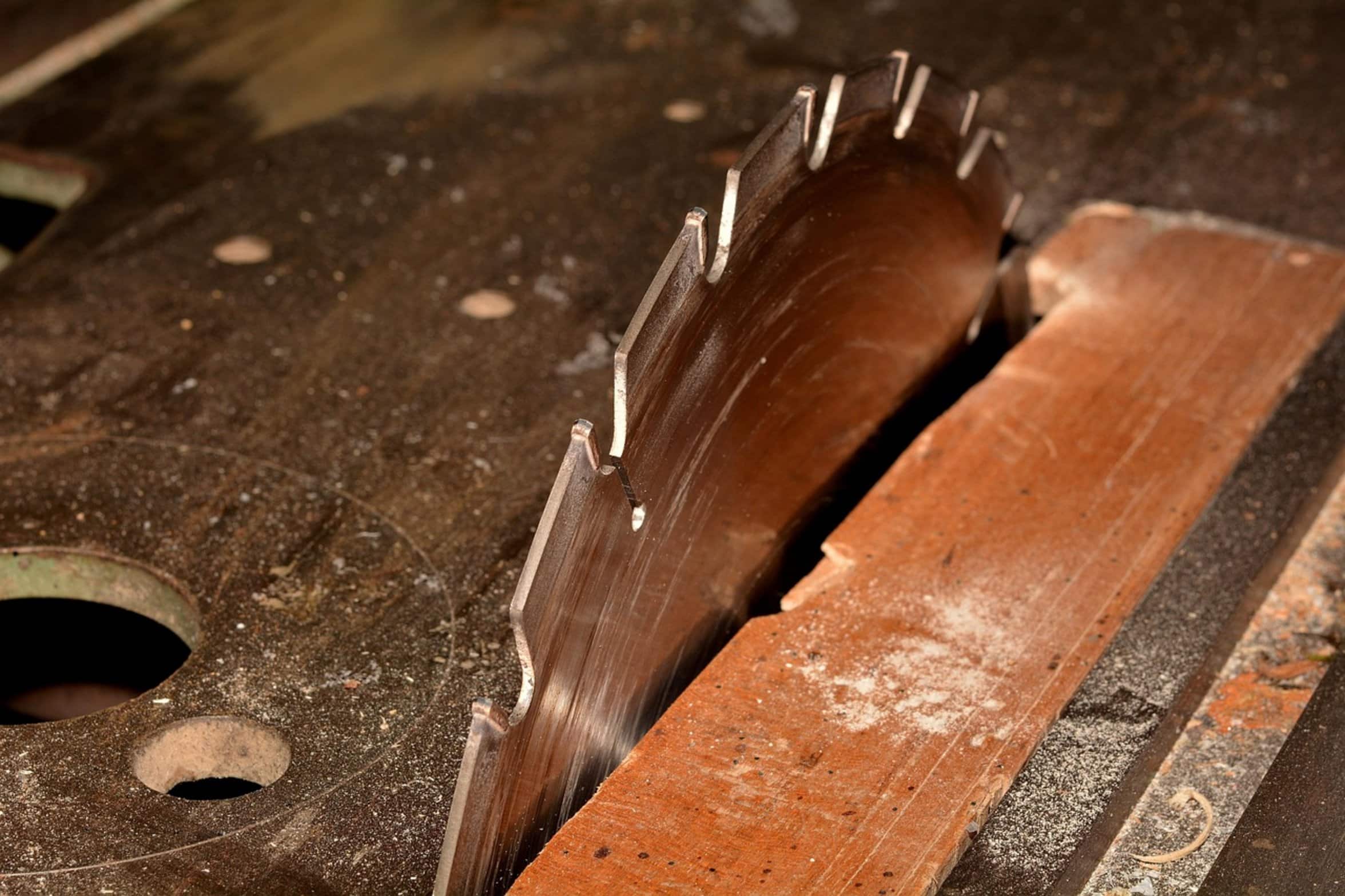
This active safety design is missing from the Powermatic. It use more old-school techniques like push sticks, riving knives, and guards. Those who prefer things purist argue they’re equally safe when done right.
The Powermatic lets you run different blades than the SawStop can detect well (like aluminum oxide, or carbon fiber). So if you work extensively with composites, the Powermatic is your only viable option. Certain blade type aren’t compatible with the SawStop system; so you lose some versatility for absolute safety on regular lumber.
Dust Collection and Shop Cleanup
It’s one or the other. One other small difference between these two machine is their ability to collect dust. The PM2000 from Powermatic features a very large open port and is designed well to accept an excellent dust extractor. Having a good dust collector is important in your shop and the Powermatic was designed with this in mind.
Similarly, the SawStop industrial models is good at managing dust, but there is a slight change in the internal geometry needed to create the braking system and occasionally may hold small particles. So you may have to spend a little more time cleaning the interior of the SawStop to keep it running well. It is just a small nuisance, but it is something worth noting if you like your shop running like a tight ship.
It really depends on what matters most to you. The Powermatic PM2000 is still an awesome saw if you want maximum mechanical toughness, and don’t care that it cuts whatever you throw at it. And if you’re concerned about liability and worker safety, then this new industrial model from SawStop is an evolutionary step that will change the way shops are run, since safe operation becomes automatic instead of something reliant on precise technique.
Both saws are good, they simply provide two different solutions to the same underlying problem: how do we use these dangerous machines? Actually it would of been better if we had more time to think about it. The moddern industrys need this.
It is naturaly easier to work with a machine that can protects you. You will recieve much better results. If you want a luxurius experience, get the SawStop.
But for those who like old school, PM2000 is best. Its a big decision based off of how you use tools. All the furnitures in your shop should be safe too.