Eventually, holding a drill becomes more hindrance than assistance. You’re attempting to drill a perfectly straight line for an inlay or dowel and your hand quiver and bit veers from the path. It happens to all of us and that’s what drill presses is for: converting a sloppy human operation into a neat and clean mechanical process.
Now the question come up, do I need an industrial size unit or something that will fit in my work area? That leaves us with the Ryobi 10-Inch Drill Press. Is it a big ol’ shop drill press?
No. Is it a cheap plastic toy? Nope. Instead, it’s for the homeowner or hobbyist who want more precision in their drilling but doesn’t have much space.
At about one-hundred bucks, they are often an impulse purchase. And we all know that easy purchases can turn out to be expensive mistakes. So before you bring it home, know what you’re purchasing.
Reviewing The Ryobi Ten Inch Drill Press
Why Homeowners Need a Drill Press
The primary advantage of this machine are precision. With a hand-held drill it’s all about memory and steady hands. You hold the drill as best you can and drill away.
The Ryobi take the variable out of the equation since the bit go into the wood at a fixed point (up and down) on a fixed column. That means the bit enters the wood at a right angle to the surface every single time. This is important when joining pieces of wood together or building cabinet.
If the hole isn’t tight then the joint won’t work and that means trouble if stress are ever applied to the joint. With this machine you know that your hole will be where it needs to be. Another feature newbies don’t seem to notice is speed control.
Precision and Speed Control Features
This tool features a simple but effective two-speed gearbox. For hard materials such as metals and hardwoods use low speed; for smaller pieces or softer wood, use high speed. Using the wrong speed will cause heat buildup, burning the material and potentially ruining your bit.
Changing from one speed to the other is fast and easy thanks to side-mounted toggle switch. It’s a little thing but it improves your workmanship and lengthens the life of your accessories. For the price point, the table that come with this drill press is sturdy.
It has a tilt feature for angled hole. That’s good for some specialty applications like dovetail jigs. It also includes a solid fence that should of be sufficient to hold your workpiece in place as you make your hole.
Table Limitations and Workarounds

But here is the caveat: The table isn’t very big. For example, if you want to drill through a sheet of plywood, you can’t just clamp it down onto table. You’ll either have to get a vise or create an extension table.
That seems to be typical for small drill press, but keep that in mind when designing your space. Don’t assume you can take a 4×4 post and drill right through it on the stock table. The other big plus is that you can use the depth stops to set a specific measurement for your holes.
Using Depth Stops for Consistency
So if you want your hole to be an inch and a half deep, you set it up once for an inch and a half and can keep drilling over and over. It is perfect for making screw clearance holes or doing pocket hole joins where they always needs to be a certain depth. And it eliminates measuring each individual hole.
Set your stop, go, drill and done. It makes the job faster and more efficient because you don’t have to constantly measure. Design: Safety features are built into design, though they require attention.
Safety Features and Precautions

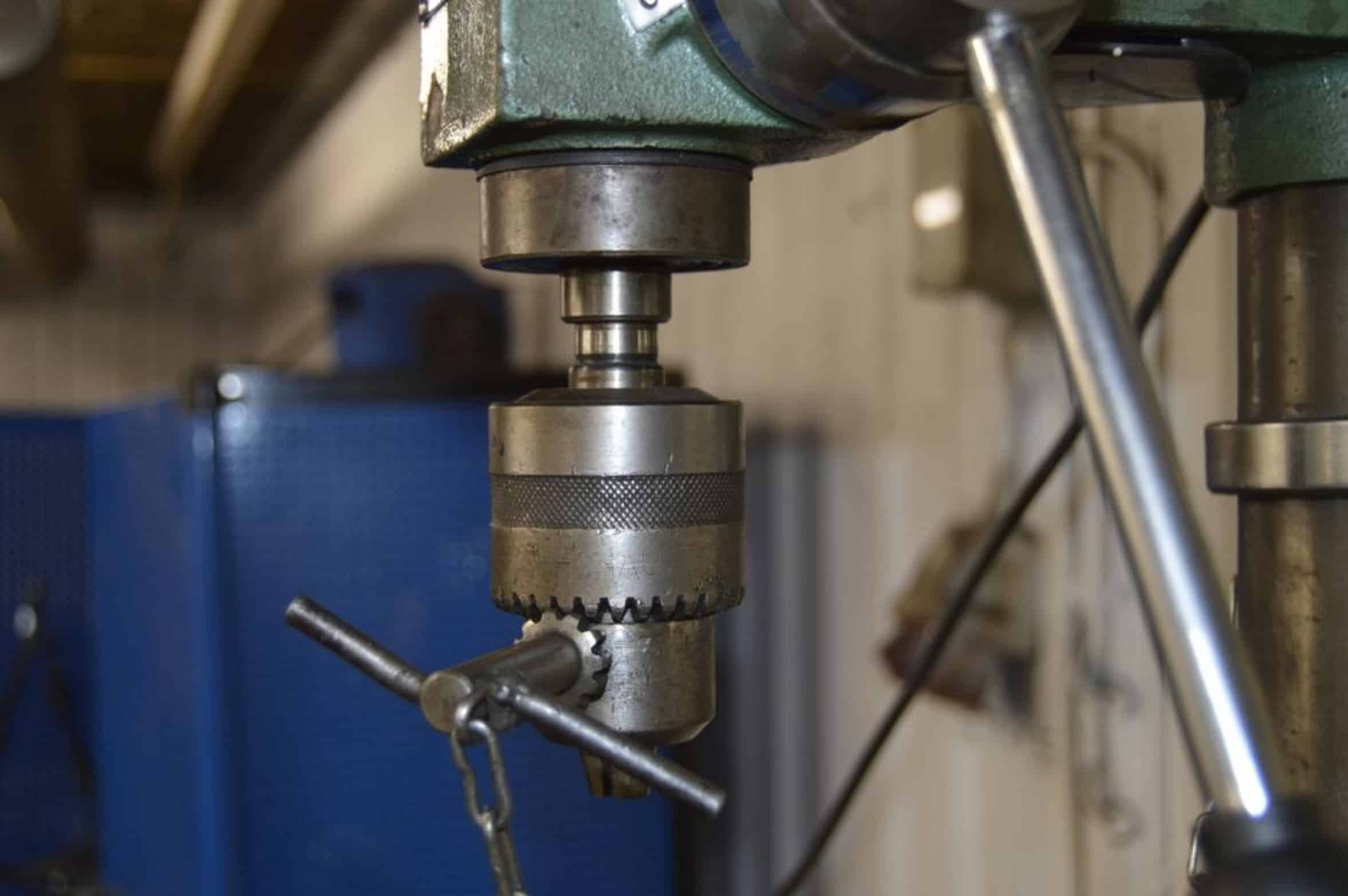
A keyed chuck (i.e., tightened by handle) keeps a tight bite on the drill bit and won’t slip loose. Protective belt cover guards against moving parts. And yet, this thing has some power.
Wear safety glasses, clamp down your workpiece and don’t put your fingers anywhere near that bit. Respect the beast. It’s a slick-looking tool.
For those who build furnitures or cabinets, or frequently need to make repairs, it’s worth considering that the cost of a Ryobi 10-Inch Drill Press can quickly become its value. It offers precision at home. It brings a bit of pro to your own garage.
On the other hand, if you’re drilling three or four holes a year, maybe a drill on a cord will suffice. It is a solid choice for anyone who want to be precise and get the same accurate results every time. It makes jiggly hands into steady work, wandering bits into straight lines.